


news 2026
« BACK
 Remodelling skull bone architecture to boost the brain’s immune defences
 When genome duplication redraws its fountain-like structure in waves
 Regenerative medicine: scientists discover the mechanisms that enable vertebrates to regrow limbs
Life Sciences
Results 1 - 7 of 7.
Health - Life Sciences - 05.03.2026
Alzheimer’s: discovery of the involvement of new cells in the onset and progression of the disease
Tanycytes (white) capture Tau protein (red) circulating in the cerebrospinal fluid and transport it along their extensions/arms, which pass through brain tissue and come into contact with blood vessels (green), into which they release this protein, which is involved in Alzheimer's disease when it accumulates in the brain.
Life Sciences - 27.02.2026
When actin guides cell division
According to a CNRS communication dated February 19, 2026. Based on a scientific publication in Science Advances , to which the RDP - Plant Reproduction and Development Laboratory contributed: "The actin cytoskeleton is required to maintain plant cell division orientation against cellular geometry." Thumbnail credit: © Camila Goldy In plants, cells cannot move or reorganize freely due to their rigid cell walls.
Life Sciences - 24.02.2026
When actin guides cell division
In plants, cells can neither move nor reorganize freely due to their rigid walls. How, then, do they correctly orient their division to build coherent tissues - A study published in Science Advances reveals that, in addition to an already well-documented classical cue, plant cells rely on the actin cytoskeleton to adjust the plane of division according to their environment.
Health - Life Sciences - 09.02.2026
In the event of neuroinflammation, the brain has a rapid defense mechanism: tiny bone channels allow immune cells to pass directly from the cranial bone to the meninges. A recent study by Inserm, CNRS and Aix-Marseille University reveals that these channels are formed in the first few weeks of life, and that their structure can be remodeled to facilitate the passage of immune cells.
Life Sciences - Health - 14.01.2026
Cutaneous neurofibromas: an initial questionnaire to measure patient stigmatization and provide better support
A team of researchers from Hôpital Henri-Mondor AP-HP, Inserm, Université Paris-Est Créteil (UPEC) and the ComPaRe - Neurofibromatosis cohort, coordinated by Dr Laura Fertitta and Pr Pierre Wolkenstein, has developed the cNF-PUSH-D'oe questionnaire.this is the first questionnaire to measure the stigma experienced by people with neurofibromatosis type 1 in relation to cutaneous neurofibromas.
Life Sciences - 14.01.2026
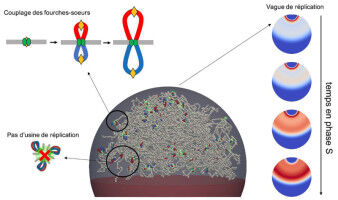
In an article published in Genome Biology , scientists show that DNA replication not only ensures faithful duplication of the genome, but also helps reshape the three-dimensional organization of chromosomes in the nucleus.
Life Sciences - Health - 08.01.2026
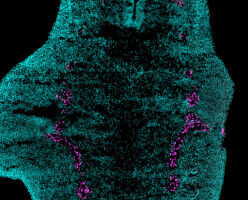
Only a few animals in the world possess the ability to regenerate tissue, enabling them to regrow limb parts or whole limbs after amputation. In a study published in the journal PNAS , a research team from Inserm, the University of Montpellier and Montpellier University Hospital shows that laboratory-grown mouse embryos can only initiate regeneration of forelimb buds, such as the front legs, for an extremely short period: between 10.5 and 12.5 days after fertilization, when limb buds are just beginning to form.


