




news
Environment
Results 1 - 20 of 173.
Environment - 11.03.2026
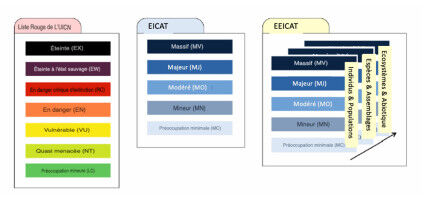
Although invasive alien species are very often reduced to predators eliminating defenseless prey, in reality they do more than simply weaken certain species: they fundamentally reshape the environment itself. In order to better assess the impacts of the roughly 3,500 invasive species on the environment, an international team of scientists led by a researcher from the CNRS 1 has developed an evolution of the " Environmental Impact Classification of Alien Taxa " (EICAT) standard.
Environment - Health - 16.02.2026
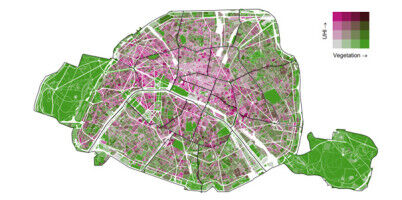
In Paris, districts with more vegetation have a lower risk of death during periods of high heat, while highly mineralized areas with few green spaces and a high potential for urban heat islands are the most exposed. This is the finding of an international study conducted by Inserm, the Barcelona Institute for Global Health (ISGlobal) and the London School of Hygiene & Tropical Medicine, published on January 27 in the journal npj Urban Sustainability, based on data collected over nearly ten years, from 2008 to 2017.
Environment - 20.01.2026
Earth Sciences - Environment - 14.01.2026
Life Sciences - Environment - 29.12.2025

An infraslow brain and body rhythm, specific to the deep sleep of mammals, has recently been identified in seven reptile and one bird species, thus demonstrating its ancestral and fundamental character.
Environment - 20.10.2025
When an invasive moss climbs the trees of Réunion Island
According to a CNRS communication dated September 22, 2025, based on a scientific publication in Current Biology co-authored by Yoan Coudert, CNRS researcher at the RDP, ENS de Lyon, together with Saioa Ricou-Dreneuc and Claudine Ah-Peng: "Architectural shift to epiphytism fuels exotic bryophyte invasiveness.
Environment - Life Sciences - 23.09.2025
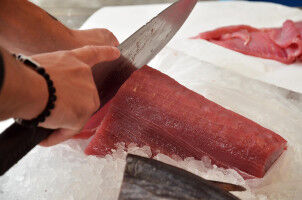
New light on toxicity of Bluefin tuna
Researchers at the ESRF - the European Synchrotron - together with CNRS, ENS de Lyon and the Institute of Marine Research in Norway, have unveiled how Atlantic Bluefin tuna transforms the toxic form of mercury into less harmful forms. Their study, published in Environmental Science & Technology , shows that the tuna's edible muscle contains not only toxic methylmercury, but also mercury bound in stable, non-toxic compounds.
Environment - Life Sciences - 18.09.2025
Mercury contamination is a global public health problem. This chemical element comes from both natural sources, such as volcanoes and forest fires, and human activity, including coal combustion, gold mining and the incineration of industrial and household waste. Bacteria transform mercury into methylmercury, a toxic form that accumulates in the food chain.
Earth Sciences - Environment - 09.09.2025
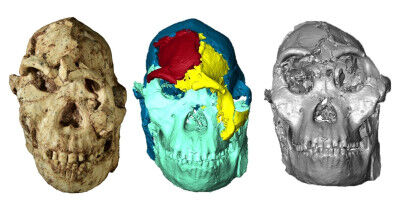
Geochemical chronologies in Paranthropus robustus teeth inform habitat and life histories
Focus on the scientific publication "Geochemical chronologies in Paranthropus robustus teeth inform habitat and life histories," published on July 23, 2025, in Nature Ecology and Evolution , to which Vincent Balter, CNRS research director and member of the LGL-TPE laboratory at ENS de Lyon, contributed alongside Andrew Sillen and Christopher Dean.
Environment - History & Archeology - 02.09.2025

Since the Middle Ages, the size of wild and domestic animals has largely been shaped by human selection: domestic animals are increasingly larger; wild animals increasingly smaller. During the 7,000 years preceding this period, however, wild and domestic species evolved in a synchronous and similar manner, suggesting that environmental and climatic changes played a greater role in shaping animal morphology.
Earth Sciences - Environment - 14.07.2025

Over the last 3,800 years, agro-pastoral activities have accelerated alpine soil erosion at a pace 4-10 times faster than their natural formation. The history of this erosion has just been revealed for the first time by a research team led by a CNRS scientist 1 . The team has shown that high-altitude soil was degraded first, under the combined effect of pastoralism and forest clearing to facilitate the movement of herds.
Earth Sciences - Environment - 21.05.2025

The NODSSUM interdisciplinary mission, led by CNRS and in collaboration with a team from Ifremer, ASNR and several national and international partners 1 , will set sail for a month on June 15. Scientists are planning two campaigns to use modern tools to map the main dumping zone for the many drums of radioactive waste that have been deliberately dumped for 40 years in the abyssal plains of the North-East Atlantic.
Environment - 31.03.2025

A French team coordinated by a CNRS 1 scientist has highlighted the harmful impact of chronic exposure to tebuconazole, one of the fungicides most widely used in agriculture in Europe, on sparrow reproduction. The results of this research, published in the journal Environmental Research , reveal a direct link between exposure to this fungicide and abnormal growth in sparrow chicks, as well as higher mortality in these young birds, particularly females.
Environment - Paleontology - 27.02.2025

The report on the interdisciplinary research carried out by researchers from Aix Marseille University and CNRS at the Laboratoire méditerranéen de préhistoire Europe (AMU/CNRS/Ministère de la Culture) and the Anthropologie bio-culturelle, Droit, Ethique et Santé laboratory (AMU/CNRS/Etablissement francais du sang), and froma laboratory at the University of Reading, UK (National Centre for Atmospheric Science, Department of Meteorology), has just been published on February 26, 2025 in the prestigious journal PLOS ONE .
Environment - Earth Sciences - 19.02.2025

Since 2000, the world's glaciers have lost 5% of their initial volume, and 273 billion tonnes of ice are disappearing every year - the equivalent of 3 Olympic swimming pools per second. These are the results of an in-depth study of the global evolution of glaciers (excluding the Antarctic and Greenland ice sheets) between 2000 and 2023, based for the first time on a combination of field measurements and satellite observations.
Environment - 03.01.2025

In order to better protect ecosystems and biodiversity, several African countries have set up innovative management models in which protected areas are co-managed by government bodies and international or national NGOs through partnerships that can span several decades. An international research team, led by INRAE and involving Le Havre University, reviews this collaborative management model in 127 partnerships covering almost 1 million square kilometres.
Environment - 10.12.2024

An international team of researchers from the AMAP laboratory (Botany and Modeling of Plant and Vegetation Architecture), under the auspices of the University of Montpellier and INRAE, has investigated the consequences of deforestation and degradation of tropical forests. The study, published in the journal Nature Ecology & Evolution on December 10, identified "winning" and "losing" species, leading to the functional impoverishment of tropical forest ecosystems.
Environment - Life Sciences - 03.12.2024

Various complex processes enable the release of the sugars contained in wood, which are used in particular to produce second-generation bioethanol. Scientists from INRAE, the University of Reims-Champagne-Ardenne and the company Européenne de Biomasse have identified ranges of technological trade-off (temperature and pre-treatment time) that enable oak and poplar residues to be reclaimed while minimising the economic investment.
Environment - Earth Sciences - 02.12.2024

Life Sciences - Environment - 13.11.2024

The seeds of maritime pines remember the temperatures they experienced during early development. This memory persists in young trees for at least two years after germination. The above discovery was made by researchers at INRAE, CEA, FCBA, the University of Orléans, the University of Perpignan, and the University of Lisbon.


